What is the Quality module in JAI CRM?
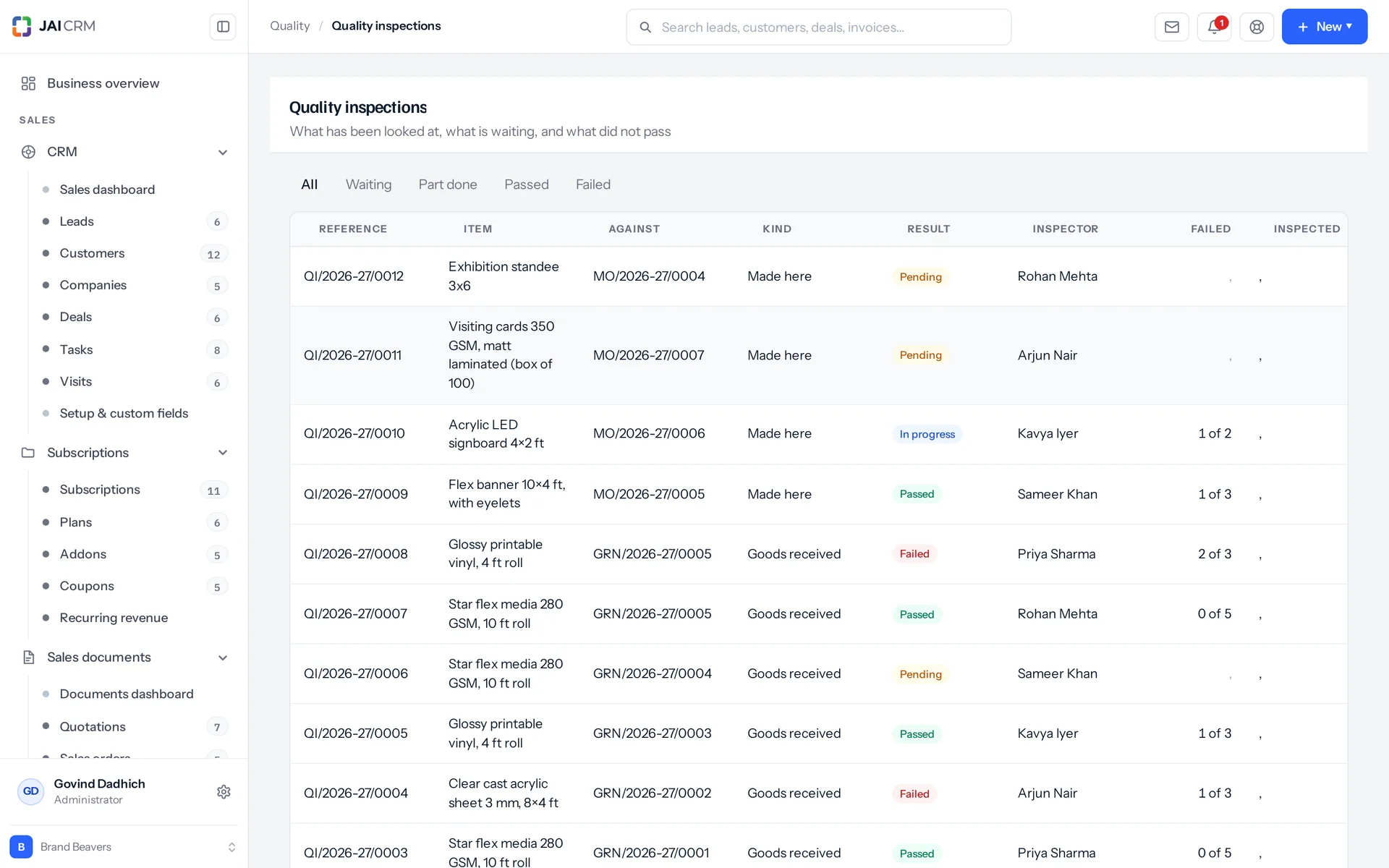
It is quality control software that holds back stock nobody has checked. The system raises inspections on manufacturing orders when they are released, and on goods receipts when they are posted. Your team checks by eye, or measures each unit in the sample. The pass or fail result comes from those readings, and a manufacturing order cannot be marked complete until its inspections pass.
Who is JAI CRM's quality control software for?
It is for businesses that make goods, buy stock in, or both, and want every batch checked on the record. If you only buy in, rules on goods received work on their own. It needs Inventory. It suits manufacturing, engineering and fabrication, pharmaceuticals, textiles and apparel, food and FMCG, printing and packaging, and trading and distribution.
How much does the Quality module cost?
Quality starts from ₹149 per user per month. You also need Inventory, because the two things Quality controls, a manufacturing order and a goods receipt, are both part of inventory.
Do I need to buy Inventory to use Quality?
Yes. Quality lists Inventory as a requirement, because the two transactions it controls, a manufacturing order and a goods receipt, are both inventory. A quality module with nothing to inspect is just a filing cabinet. Manufacturing is optional. If you only buy stock in, rules for goods received work perfectly well on their own.
Can an inspector just mark a batch as passed?
No. The result is worked out from what was measured against what was allowed, and setting the word directly is refused. The status field is declared in the editor on purpose, so the attempt reaches the guard and is turned down. If the field were simply left undeclared, the change would be quietly dropped and the caller told it had worked, which is worse. An inspection that could be passed by typing is not evidence of anything.
Is quality control software useful if we only buy goods and do not manufacture?
Yes. A rule is written for an item and a transaction type, and goods received is one of the two types. You do not need to switch on anything about manufacturing. Inspections are raised the moment a receipt is posted. You get the same templates and limits, the same bench screen and a rejection rate per item, without a single bill of materials (BOM, the list of parts that go into a product) in the system.
Does a failed delivery from a supplier get blocked?
No, and that is on purpose, not something missing. Stock from a vendor is already in your building, good or not. Refusing to record it would leave the shelf and the register disagreeing, which is worse than recording it and flagging it. So the receipt posts, the inspection is raised against that receipt number, and a failure is flagged on a document someone can act on. A person raises the debit note itself, in Purchase. A manufacturing order is the opposite case, because that stock does not exist yet. There, completion is refused outright.
We check things by eye, not with instruments. Does that count?
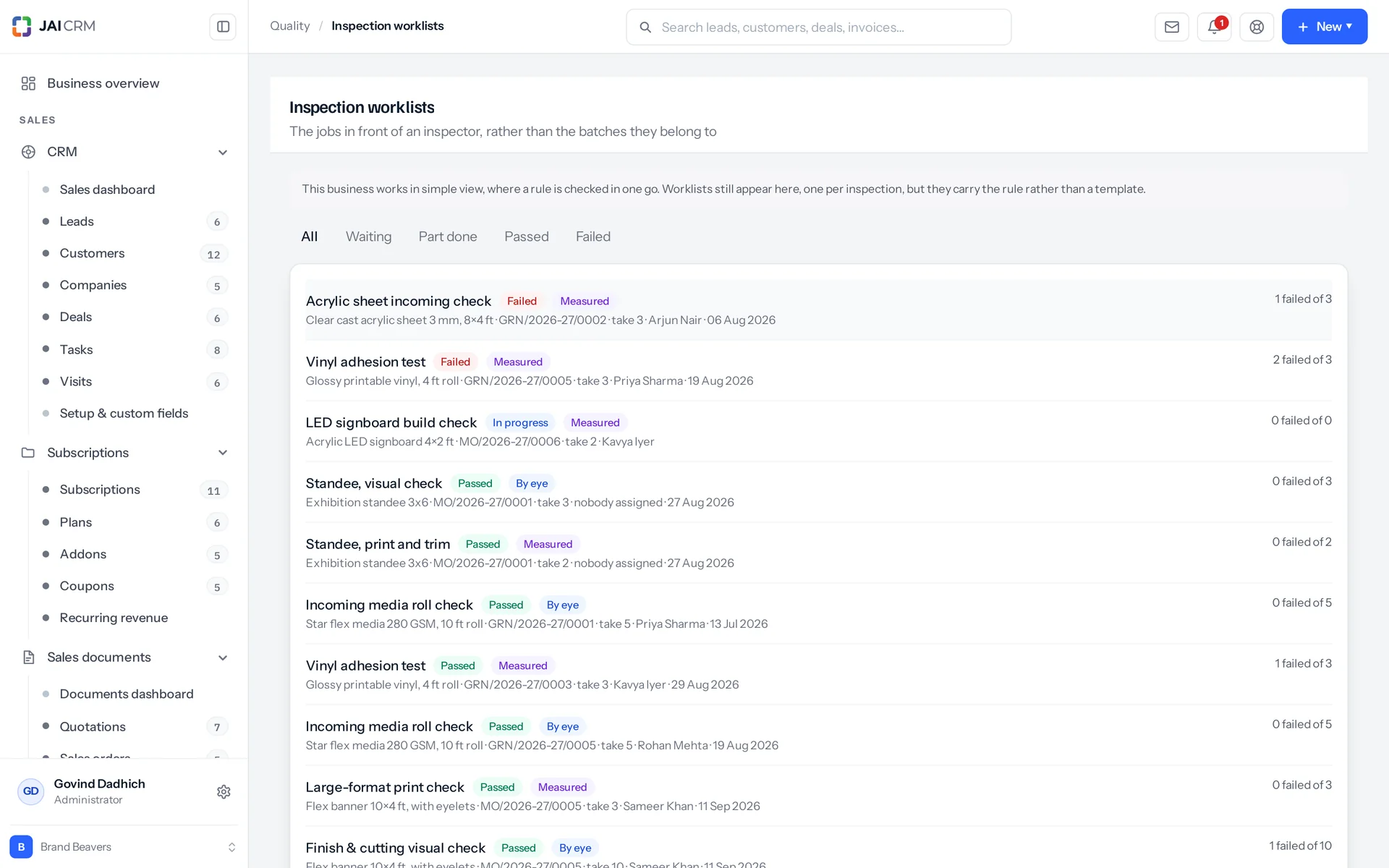
Yes. It is a proper mode, not a workaround. Simple view asks for one number: how many of the units you took were not good enough. It works out how many passed from the sample size. The allowance is judged the same way, and the run is blocked just as firmly. The two modes change what you are asked for, not how strictly it is judged.
If we change a quality limit next year, what happens to old inspections?
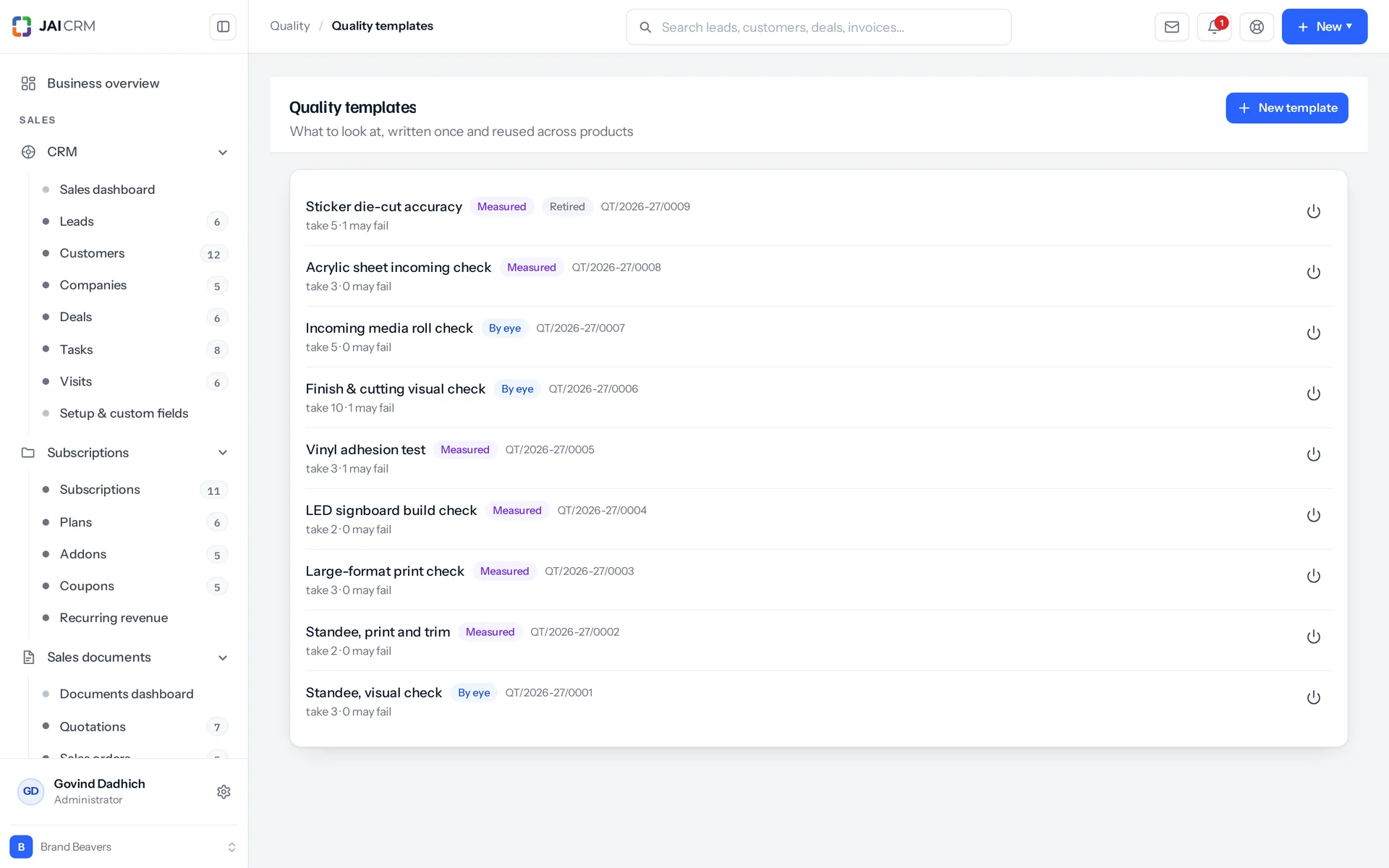
Nothing at all. Whether a reading passed is stored when it is taken, not recalculated on the way to the screen. The sample size and allowance are copied onto the inspection when it is raised. So changing a rule next month cannot rewrite whether last month's batch passed. In the same way, a template already attached to a rule cannot have what it measures changed. A rule with inspections against it cannot be re-scoped or have its limits edited at all. You clone it and attach the copy, so the old records still describe a check that was really set up.
Can someone without a login be the inspector?
Yes, and that is how it is meant to work. The inspector is an employee on the staff list, not a user account. An inspection is signed for by someone with a name and a ticket, and the browser they used is not that. Bench staff who never log in can still be the named signatory. The bench screen will not record anything until one is named.
What happens if the inspector skips a parameter?
The unit is recorded as failed, not skipped. Before saving, the measure dialog warns you how many parameters were not read, and that a unit with a missing reading counts as failed. Then it does exactly that. Otherwise a batch could pass with a skipped parameter, and the inspection would certify something nobody looked at.
Will quality checks start blocking orders the day we switch them on?
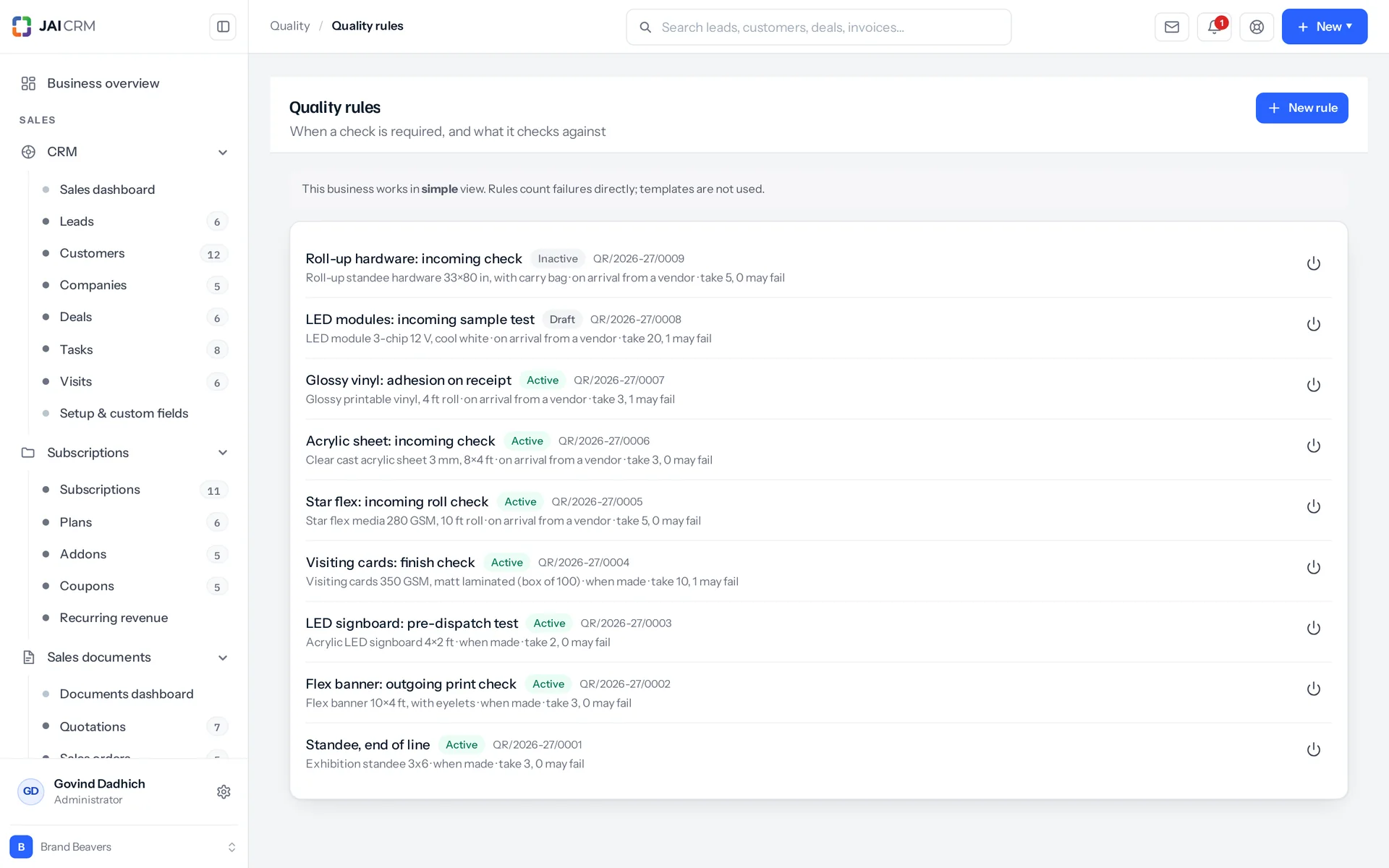
Only where you tell them to. Rules start as drafts, and a draft enforces nothing. You can write the whole set of rules while the shop carries on as before, then switch them on one rule at a time. In measured mode, a rule with no templates cannot be activated at all, because an active one with none would raise an empty inspection. Other mistakes are also refused when you write them, not found later at a bench. Two examples: a quantitative (measured) template with no parameters, and an allowance of five failures in a sample of two.
Can we trace a quality reading back to one particular unit?
Yes, where the item is tracked that way. Readings are stored against the sample they were taken from. For a serial-tracked item, that sample carries the serial number of the unit measured. There is one reading per parameter per unit, and duplicates are not possible. If the item is not serial-tracked, the sample is unit one, unit two and so on of what you took. The reading shows which parameter, what it read and what it was judged against. The inspection shows when the check was done and who signed for it.