
One screen, built to answer the question somebody actually walks over to ask: how is it going?
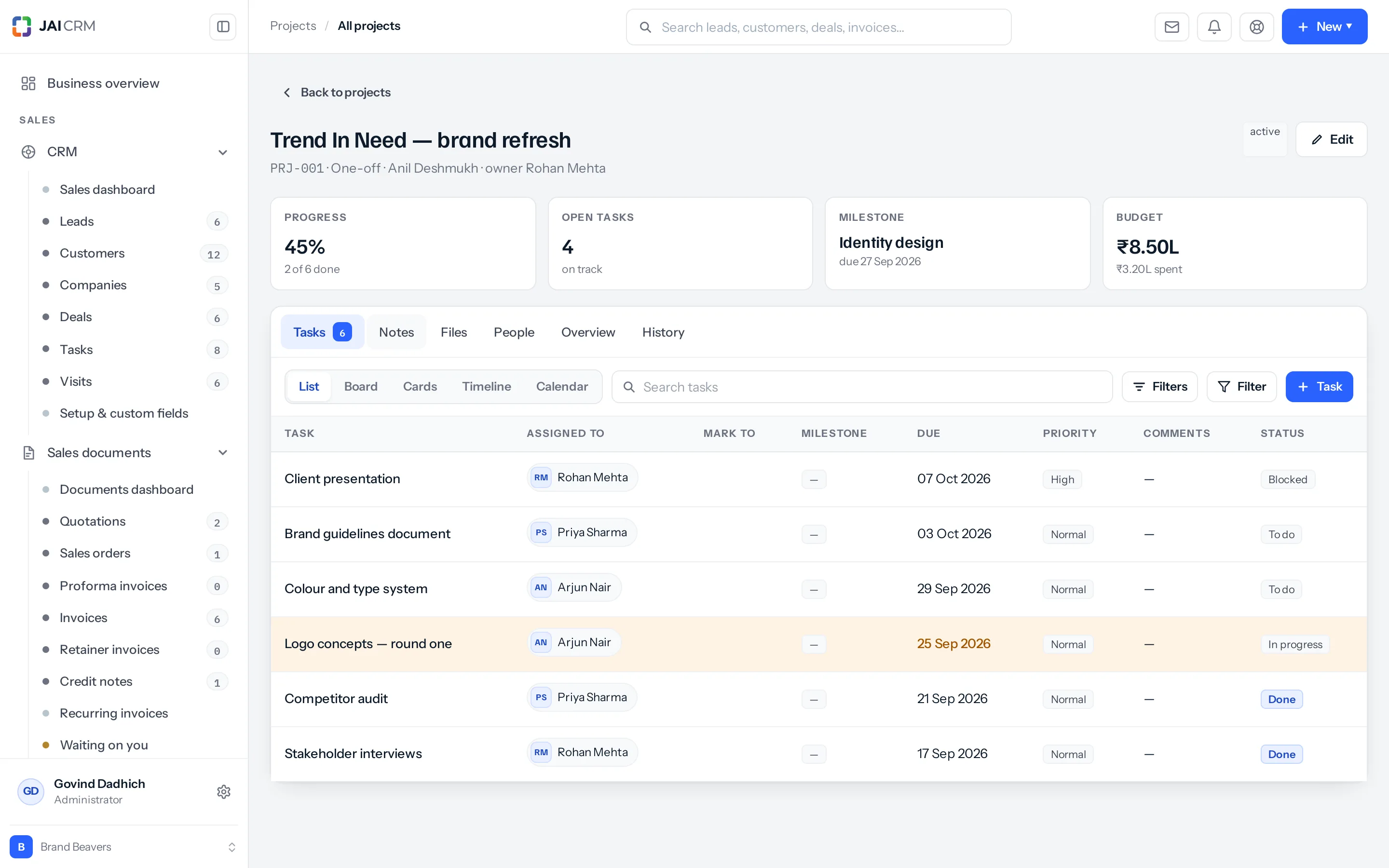
The four tiles
| Tile | Answers | Worry when |
|---|---|---|
| Progress | How much of the work is done, with the count beneath it. | It is well behind where the dates say it should be. |
| Open tasks | How much is left, and whether it is on track. | The number is not falling week to week. |
| Milestone | The next one and its date. | It is in the past. |
| Budget | What it is worth, and what has been spent. | Spend is running ahead of progress. |
The last one is the whole discipline of running a project. 45% done and 38% spent is a job going well. 45% done and 80% spent is a job in trouble, and it is in trouble now rather than at the end.
The six tabs
| Tab | What is on it |
|---|---|
| Tasks | The work, in five different views. |
| Notes | What was said and decided. |
| Files | The brief, the approvals, the deliverables. |
| People | Your team, groups, vendors and the client’s contacts. |
| Overview | The details — dates, budget, billing, description. |
| History | What changed, when, and who changed it. |
The line under the name
Code, type, customer and owner, on one line. It is there so that somebody arriving at the record from a search knows in one glance whose job this is and who is accountable for it — without opening a tab.
Owner is not the same as assignee
The owner is accountable for the project. An assignee is responsible for one task. One project, one owner; many tasks, many assignees.
Set the owner to whoever would be asked if the client rang to complain — not to whoever happened to create the record. It defaults to the creator, and left alone it quietly makes the wrong person the point of contact.
Where to go next
Something missing or wrong here? Tell us. A question that needed asking usually means a page that needed writing.