
Somebody brings something back. The natural thing to want is for the sale to be undone — and that is exactly what must not happen.
The original invoice stays as it was. It happened, the customer has a copy, and the GST on it was declared. What is raised instead is a credit note, which is the document that reverses tax properly and which a customer can be shown.
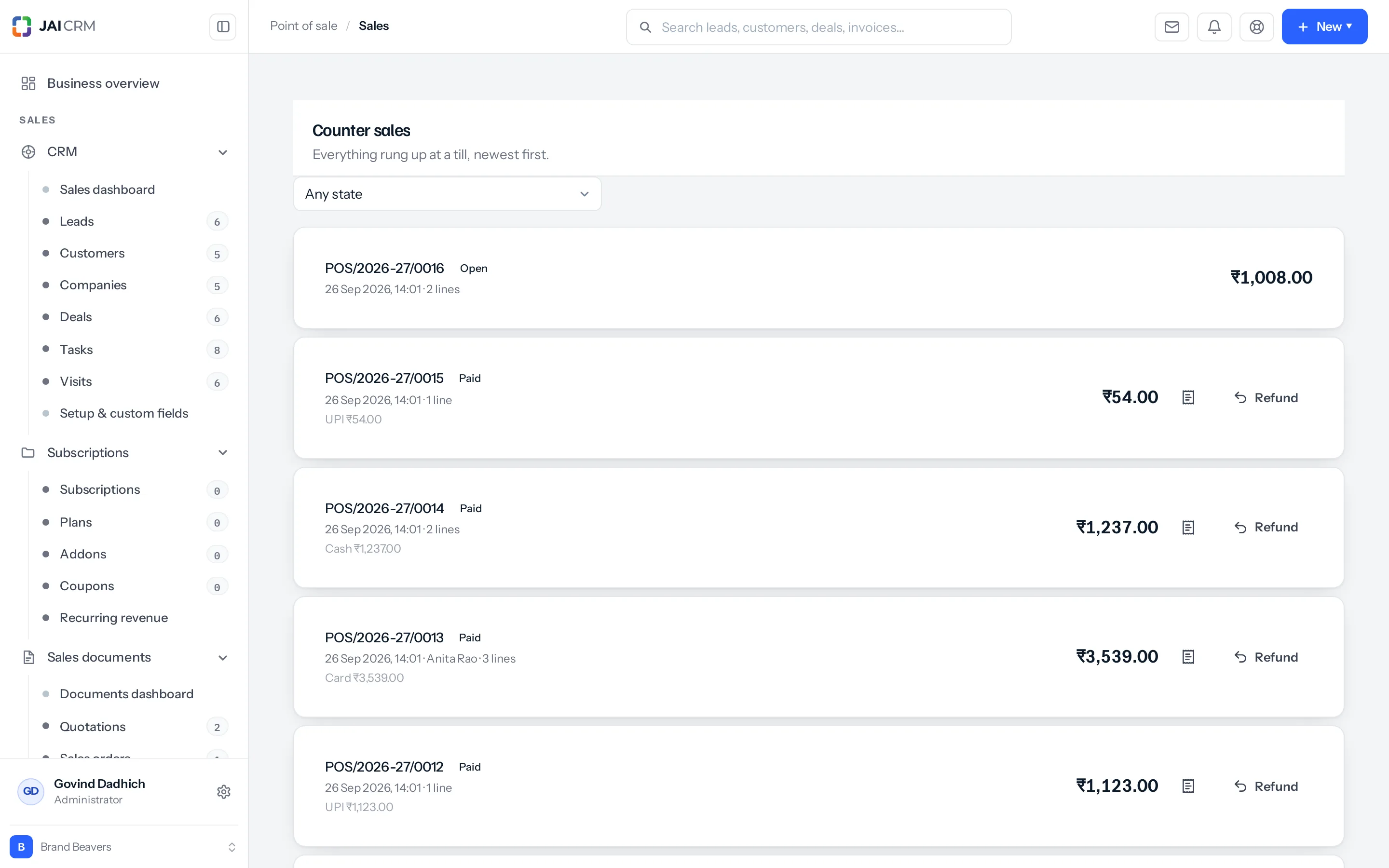
Part of a sale is the normal case
Somebody brings back one of three things. So a refund takes lines and quantities, not a whole sale, and it checks them against what is left after any earlier refund.
That last clause is the one doing the work. Without it, three separate visits could each refund the same item, and a sale of one thing could pay out three times. The counter will not give back more than was sold, however many visits it is spread over.
What a refund does
- Raises a credit note against the original invoice.
- Puts the goods back on the shelf — expanding a kit into its parts, exactly as the sale did.
- Records the money going back out, by whichever method.
- Takes the cash out of the drawer that is open now.
The drawer that is open now, not the one the sale happened on. A customer returning on Thursday something bought on Monday is handed cash out of Thursday’s till, because that is the drawer the notes physically come from. Charging it to Monday’s closed drawer would make Monday wrong and Thursday unexplainable.
Refund cash is not takings
Cash handed back is counted against the day’s cash, not towards it. It sounds obvious written down, and it is precisely the sum that goes wrong: a drawer that counts a refund as a taking is short by twice the refund at the end of the day, and nobody can find it.
Refund, or void?
| The sale is | Do | Because |
|---|---|---|
| Paid for | Refund | Money changed hands. It needs a credit note. |
| Still open | Void | Nothing was taken. There is nothing to reverse and no document to raise. |
The till will not let you void a paid sale — it says so, and tells you to refund it instead. Voiding one would leave money in a drawer against a sale that officially never happened.
Who may
A refund needs a manager. Where the person doing it already holds the right to approve refunds, they simply do it; where they do not, a manager types a PIN at the till. Either way it is recorded — who, when, which sale, how much, and why.
A cashier cannot refund at all by default, and that is the intended shape. Taking money and giving it back are different powers, and a role that holds both is a role with nobody checking it.
Something missing or wrong here? Tell us. A question that needed asking usually means a page that needed writing.