
A project is a job you are delivering: a brand refresh, a factory fit-out, a three-month retainer. It has a customer, usually a budget, and an end.
What makes it worth being a record rather than a spreadsheet is that four things which normally live apart are held together: what has to be done, who is doing it, how long it is taking, and what has been billed.
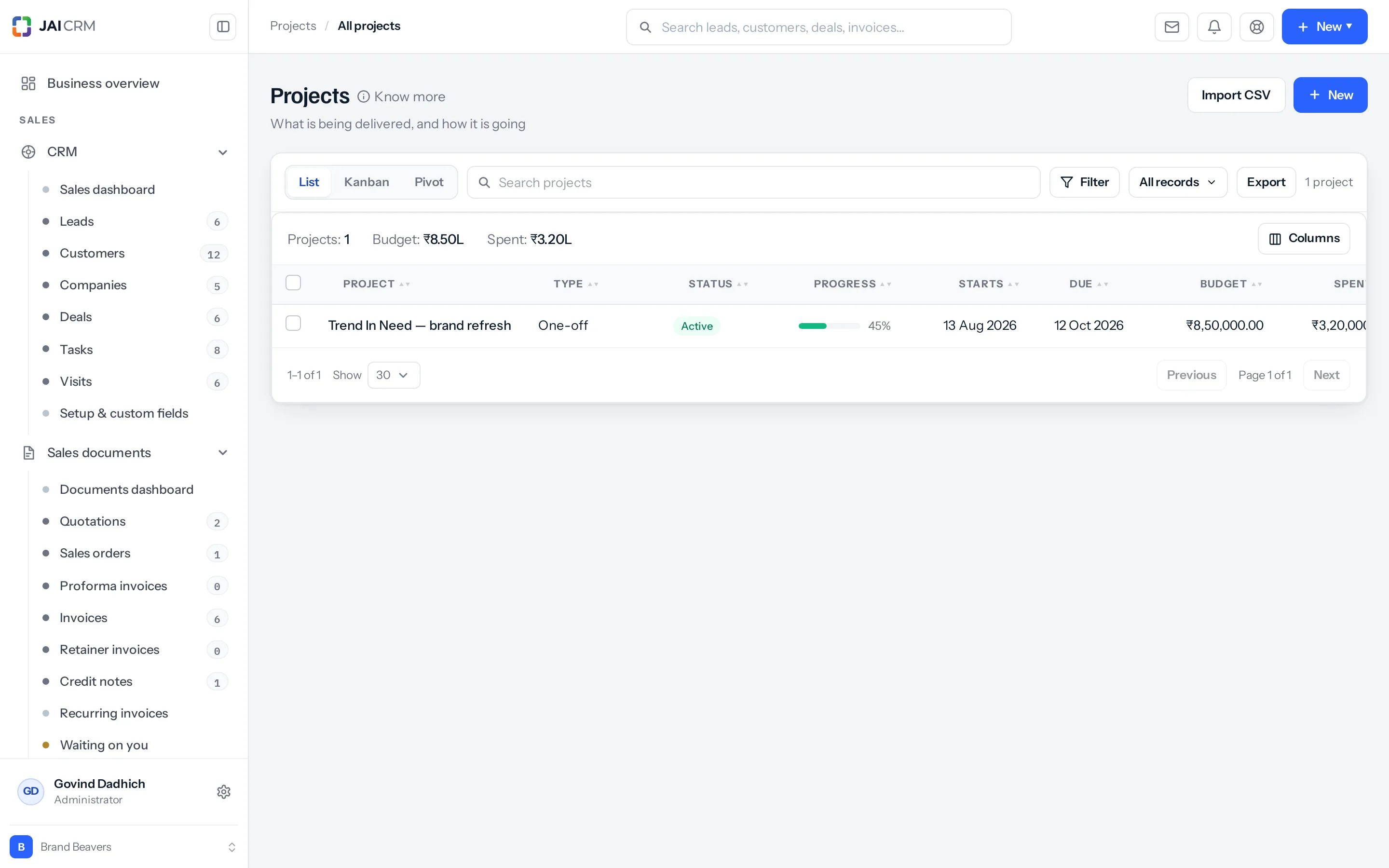
What a project holds
| Part | What it is for |
|---|---|
| Customer | Who it is for. Required before you can invoice it. |
| Budget and spent | What it is worth and what it has cost so far. |
| Dates | When it starts, when it is due, and when it actually ended. |
| Tasks | The work, assignable and datable. |
| Milestones | The points that matter, each of which can carry an amount. |
| Timesheets | Hours against tasks, billable or not. |
| People | Your team, groups, outside vendors and the client’s own contacts. |
| Files and notes | The brief, the approvals, the things said. |
Why it is tied to the customer
Because the invoice has to come from somewhere. A project without a customer cannot be billed — and the system says exactly that rather than producing an invoice addressed to nobody:
This project has no customer, so there is nobody to invoice. Set the customer on the project first.Who it is for
- Agencies and studios — client work, billed by the job or by the hour.
- Professional services — consultants, architects, accountants.
- Contractors — a site, a fit-out, a build with stages.
- Anybody running internal work that has a deadline and people on it.
If what you do is repeatable and identical every month, a recurring invoice is a better fit than a project. Projects are for work with a shape — stages, a budget, an end.
Where to go next
Something missing or wrong here? Tell us. A question that needed asking usually means a page that needed writing.