
Most email is routine: a question, a meeting, an order confirmed. Some is not. Before a reply is written, every email is checked, and one that is sensitive is written differently and marked for you.
What counts as sensitive
- A complaint, or a sender who is clearly upset
- A dispute about a payment or an invoice
- Anything that mentions legal action or a lawyer
- A cancellation, or a threat to cancel
- A negotiation over price or terms
- An escalation to somebody senior
Quotation requests, meeting requests, routine questions and thanks are not sensitive.
What changes
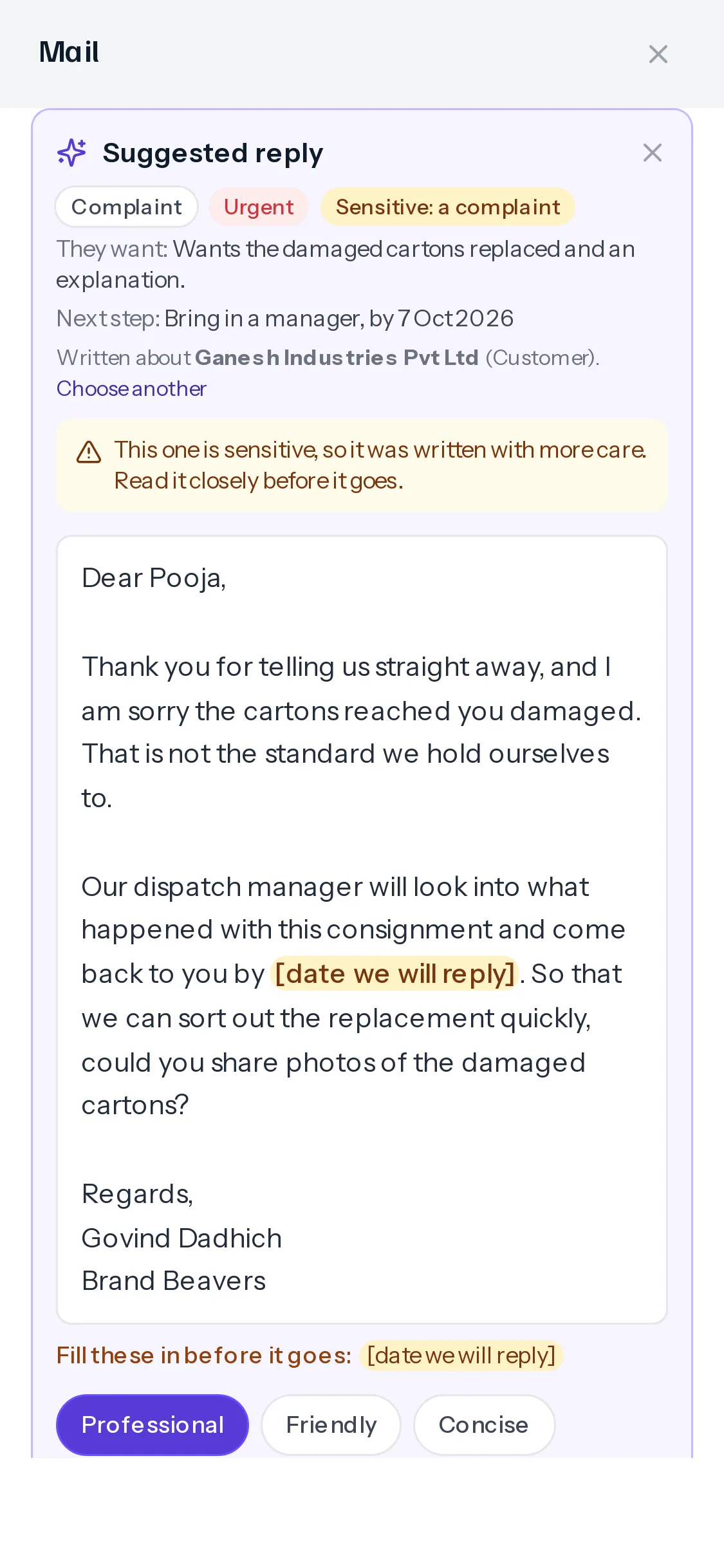
- The panel shows Sensitive with the reason, for example Sensitive: a complaint.
- The reply is written by the model set for complex and sensitive emails, normally a stronger one than writes everyday replies.
- Above the draft: This one is sensitive, so it was written with more care. Read it closely before it goes.
- The draft acknowledges the concern specifically and stays calm. It does not argue, does not admit fault or liability, and does not offer compensation, a refund or a discount. It says who will look into it and that they will come back, without naming a date unless your records give one.
Why it is done this way
A reply to an angry customer is the one most likely to be forwarded, quoted or kept. The rules exist so that a draft never commits the business to something only a person should decide: a refund, a replacement at no cost, an admission that could be used later. Those stay with you, to write in after you have looked into it.
The check is a judgement, and it can miss. Read any reply to an upset customer closely whether or not it is marked.
Something missing or wrong here? Tell us. A question that needed asking usually means a page that needed writing.