
Go to Sales documents → Documents dashboard. This is the screen that answers “who owes us, and how long have they owed it”.
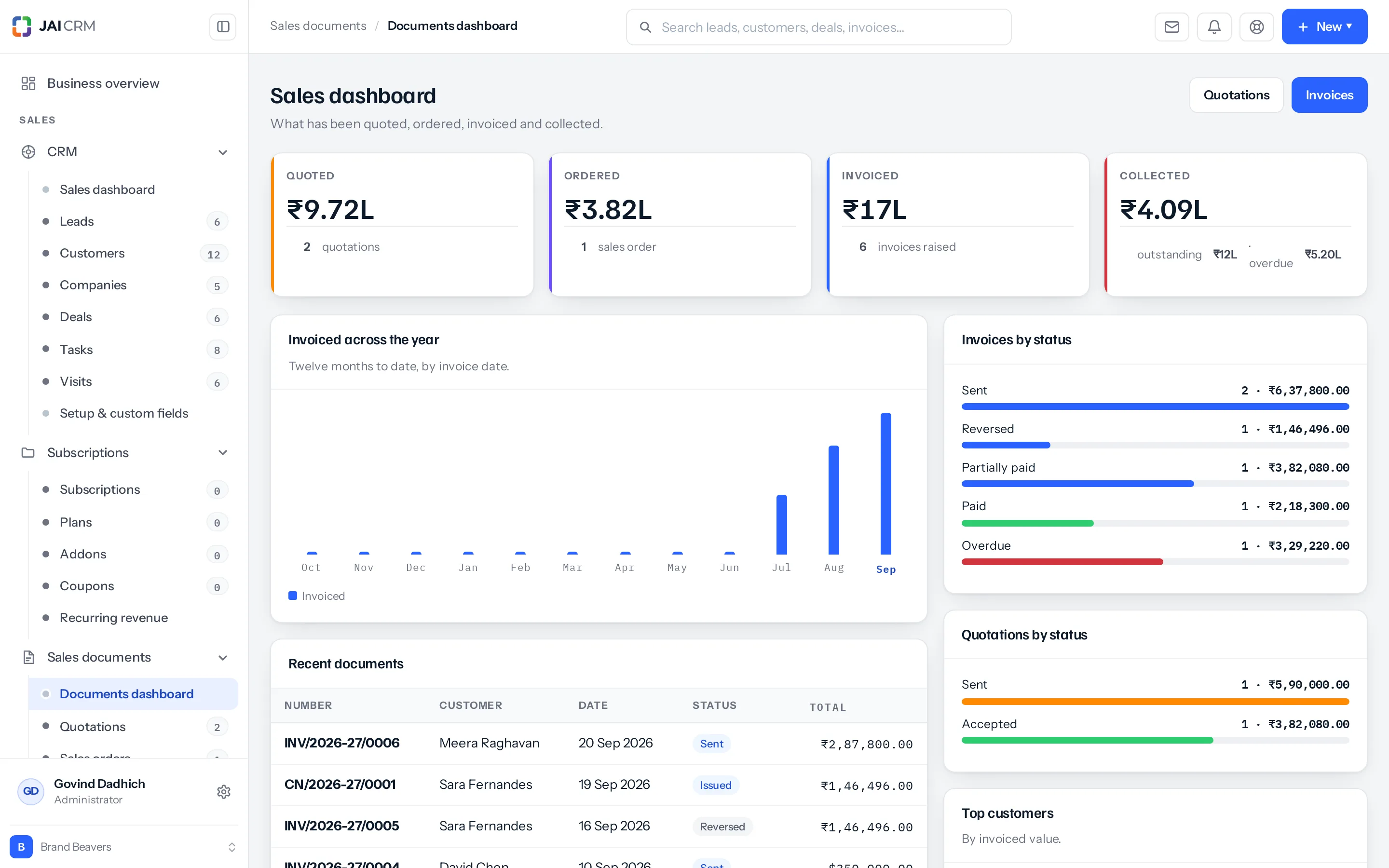
The five buckets
Everything outstanding falls into one of five: current (not yet due), 1–30 days, 31–60, 61–90, and 90 plus.
The buckets matter more than the total. A business owed ₹40 lakh of which everything is current is healthy. A business owed ₹12 lakh of which ₹9 lakh is past ninety days has a problem, and the total hides it.
What else is on it
- Your top eight customers by value outstanding — where the money actually is.
- The twelve oldest overdue invoices — the call list, in order.
- A window you can set from one to twenty-four months, twelve by default.
What is not counted
Five statuses carry no receivable balance: draft, cancelled, void, reversed and written off. A draft invoice is not money owed, and counting it would inflate the figure you make decisions on.
Using it
- Open it on a Monday.
- Look at the 90 plus bucket first. That money is at risk.
- Work down the twelve oldest. They are ordered for you.
- Check the top eight. One customer carrying a third of your receivables is a concentration worth knowing about.
The five buckets
Every unpaid balance falls into exactly one of these, worked out from the due date — not the invoice date.
| Bucket | Means | What to do |
|---|---|---|
| Current | Not due yet. | Nothing. It is not late. |
| 1–30 days | Just over. | A reminder. Usually an oversight. |
| 31–60 days | A month late. | A phone call, not an email. |
| 61–90 days | Two months late. | Stop extending credit. Decide something. |
| 90+ days | A quarter late. | Treat as doubtful until proven otherwise. |
Current is not the same as safe. A large invoice that falls due next week belongs in your cash planning today. The bucket answers “is it late”, not “is it a risk”.
Reading it honestly
The number that matters is not the total outstanding, it is how the total is distributed. ₹10 lakh that is all Current is a healthy business. The same ₹10 lakh sitting in 90+ is a business that has already lost the money and has not admitted it.
Two habits get more out of this screen than any feature:
- Look at it weekly, on the same day. Ageing is a trend, and a number you see once a quarter is not a trend.
- Work it from the bottom up. The oldest debt is the least likely to be collected and the most likely to be forgotten, and everybody instinctively starts at the top.
What counts as outstanding
An invoice counts while it is still owed. Five statuses take a document out of the receivables figure entirely — a cancelled or written-off invoice is not money you are waiting for, and leaving it in would flatter the total. A credit note reduces the balance rather than removing the invoice.
Where to go next
Something missing or wrong here? Tell us. A question that needed asking usually means a page that needed writing.